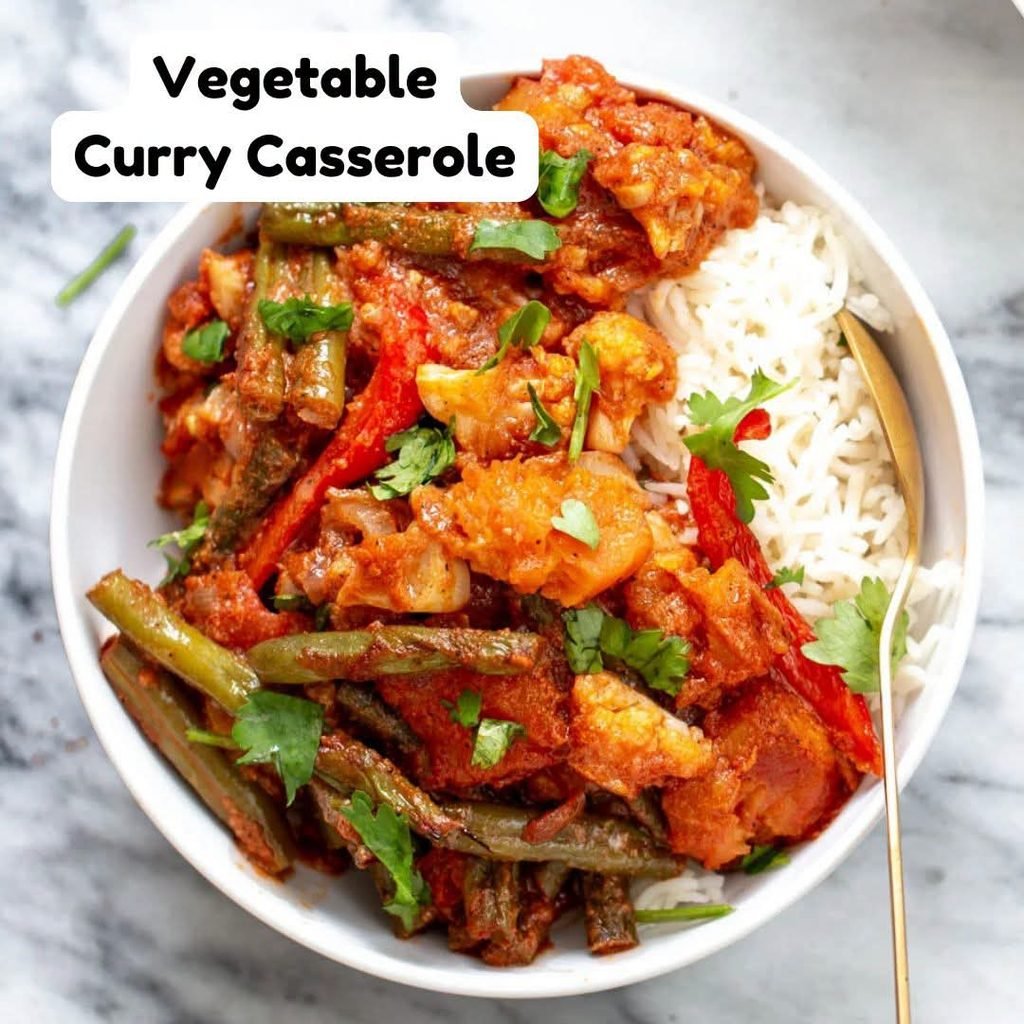
This Vegetable Curry Casserole is a colorful, comforting meal packed with tender vegetables simmered in a rich tomato curry sauce and served with fluffy basmati rice. Inspired by the dish in your photo, this recipe combines cauliflower, green beans, bell peppers, and warm Indian spices for a satisfying meat-free dinner.
It’s easy to customize with the vegetables you have on hand, and you can make it vegan and dairy-free. Serve it for a cozy weeknight dinner, meal prep, or a family gathering.
Prep time
15 minutes
Cook time
30 minutes
Servings
4–6
- Course: Main course
- Cuisine: Indian-inspired
- Diet: Vegetarian, vegan option
- Cooking method: Stovetop
- Difficulty: Easy
Why You’ll Love This Vegetable Curry
- Colorful and nourishing: A delicious mix of vegetables in every serving.
- Rich curry flavor: Garam masala, cumin, coriander, and turmeric create a fragrant sauce.
- Easy to customize: Use fresh or frozen vegetables.
- Perfect for meal prep: The curry reheats beautifully.
- Great with rice: Serve it over basmati rice to make a complete, comforting meal.
Ingredients for Vegetable Curry Casserole

For the vegetable curry
- 2 tablespoons vegetable oil or olive oil
- 1 large onion, finely chopped
- 3 garlic cloves, minced
- 1 tablespoon freshly grated ginger
- 1 red bell pepper, sliced
- 2 cups cauliflower florets
- 1 cup green beans, trimmed and cut into pieces
- 1 medium carrot, sliced
- 1 can (14 oz / 400 g) diced tomatoes
- 1 cup vegetable broth
- ½ cup coconut milk, optional, for a creamier curry
- 1 teaspoon ground cumin
- 1 teaspoon ground coriander
- 1 teaspoon garam masala
- ½ teaspoon turmeric
- ½ teaspoon paprika
- ¼–½ teaspoon chili powder, optional
- Salt and black pepper, to taste
For serving
- 1½ cups basmati rice
- Water, according to the rice package instructions
- Fresh cilantro, chopped
- Lemon wedges, optional
Step-by-Step Instructions
Step 1: Prepare the vegetables

Wash and prepare all the vegetables. Cut the cauliflower into bite-sized florets, slice the bell pepper and carrot, trim the green beans, and finely chop the onion, garlic, and ginger.
Cutting the vegetables into similar-sized pieces helps them cook evenly.
Step 2: Sauté the onion, garlic, and ginger

Heat the oil in a large deep skillet or heavy-bottomed pot over medium heat.
Add the chopped onion and cook for 3–4 minutes, stirring occasionally, until softened. Add the garlic and ginger and cook for another 30–60 seconds until fragrant.
Step 3: Add the curry spices

Stir in the cumin, coriander, garam masala, turmeric, paprika, and optional chili powder.
Cook for about 30 seconds, stirring constantly, to release the spices’ aroma. If the mixture looks too dry, add a small splash of broth to prevent the spices from burning.
Step 4: Add the tomatoes and broth

Pour in the diced tomatoes and vegetable broth. Stir well, scraping up any flavorful bits from the bottom of the pot.
If you’d like a creamier curry, add the coconut milk now. Bring the mixture to a gentle simmer.
Step 5: Add the vegetables and simmer

Add the cauliflower, green beans, carrot, and red bell pepper. Stir until the vegetables are coated in the curry sauce.
Cover and simmer gently for 20–25 minutes, stirring occasionally, until the vegetables are tender but still hold their shape. If the sauce becomes too thick, add a little more broth or water.
Season with salt and black pepper to taste. For a thicker sauce, uncover the pot for the final 3–5 minutes.
Step 6: Cook the rice and serve

While the curry simmers, rinse the basmati rice until the water runs mostly clear. Cook it according to the package instructions.
Fluff the rice with a fork. Spoon it into bowls, add a generous serving of vegetable curry, and finish with chopped cilantro and a squeeze of lemon juice if desired.
Serve hot and enjoy!
Tips for the Best Vegetable Curry Casserole
- Cut vegetables evenly. This helps them cook at the same rate.
- Toast the spices. Briefly cooking them with the onion mixture creates a deeper curry flavor.
- Avoid overcooking. The vegetables should be tender without turning mushy.
- Adjust the heat. Add chili powder for a spicier curry or leave it out for a mild family-friendly version.
- Make it creamy. Stir in coconut milk for a smooth, rich sauce.
- Boost the protein. Add chickpeas, cooked lentils, or cubed tofu.
Delicious Variations

Chickpea Vegetable Curry
Add one drained 15-ounce can of chickpeas with the vegetables for extra protein and a heartier meal.

Creamy Coconut Curry
Use ¾–1 cup coconut milk and reduce the broth slightly for a richer, creamier sauce.

Spicy Vegetable Curry
Add fresh green chilies or extra chili powder and finish with a squeeze of lime.
What to Serve with Vegetable Curry


4
This curry is delicious with:
- Steamed basmati rice
- Warm naan or roti
- Fresh cucumber and tomato salad
- Crispy papadums
- Mango chutney or a squeeze of fresh lemon
For a balanced dinner, serve the curry over rice with a fresh cucumber salad on the side.
Storage and Reheating
Refrigerator: Store leftover curry in an airtight container for up to 3–4 days. Keep rice separately when possible.
Freezer: Freeze the curry without rice for up to 3 months for best quality. Vegetables may soften slightly after thawing.
Reheating: Warm in a saucepan over medium-low heat, adding a splash of water or broth if needed. You can also microwave individual portions until steaming hot, stirring halfway through.
Meal-prep tip: The curry can be made a day ahead. Its flavors often become even more developed after resting overnight.
Frequently Asked Questions
Can I use frozen vegetables?
Yes! Frozen cauliflower, green beans, carrots, or mixed vegetables work well. Add them directly to the curry and adjust the cooking time until they are tender.
Is this vegetable curry vegan?
Yes, as written, it is vegan when you use vegetable oil and vegetable broth. Coconut milk is optional and dairy-free.
Can I make this recipe without coconut milk?
Absolutely. The tomatoes and broth create a flavorful sauce on their own. For extra richness without coconut milk, stir in a spoonful of cashew cream if desired.
Can I bake this as a true casserole?
Yes. Prepare the curry on the stovetop until the vegetables are nearly tender, then transfer it to an oven-safe baking dish. Bake uncovered at 375°F (190°C) for about 15–20 minutes, until bubbling and fully heated. For a rice-topped casserole, use cooked rice and add it as a layer before baking.
How can I make the curry thicker?
Simmer it uncovered for a few extra minutes. You can also mash a few cauliflower pieces into the sauce to thicken it naturally.
Nutrition Information
Estimated per serving of curry with rice, assuming 6 servings. Actual nutrition varies with ingredients and portion sizes.
Calories
350
Protein
8 g
Carbs
59 g
Fat
10 g
Fiber
7 g
Sugar
9 g
Printable Recipe Card

Vegetable Curry Casserole
A colorful, comforting vegetable curry served with fluffy basmati rice.
Prep
15 min
Cook
30 min
Servings
6Choose recipe yield4 servings6 servings
Ingredients
- 2 tablespoons oil
- 1 large onion, chopped
- 3 garlic cloves, minced
- 1 tablespoon grated ginger
- 1 red bell pepper, sliced
- 2 cups cauliflower florets
- 1 cup green beans, cut
- 1 carrot, sliced
- 1 can (14 oz / 400 g) diced tomatoes
- 1 cup vegetable broth
- ½ cup coconut milk, optional
- 1 teaspoon each ground cumin, ground coriander, and garam masala
- ½ teaspoon each turmeric and paprika
- ¼–½ teaspoon chili powder, optional
- Salt and black pepper to taste
- 1½ cups basmati rice, plus water for cooking
- Fresh cilantro and lemon wedges
Instructions
- Prepare and chop the vegetables.
- Sauté onion in oil for 3–4 minutes. Add garlic and ginger; cook until fragrant.
- Stir in all dry spices and cook for 30 seconds.
- Add tomatoes, broth, and optional coconut milk. Bring to a simmer.
- Add vegetables, cover, and simmer for 20–25 minutes until tender. Season to taste.
- Cook rice according to package directions. Serve the curry over rice, garnished with cilantro and